The anti-poaching initiative
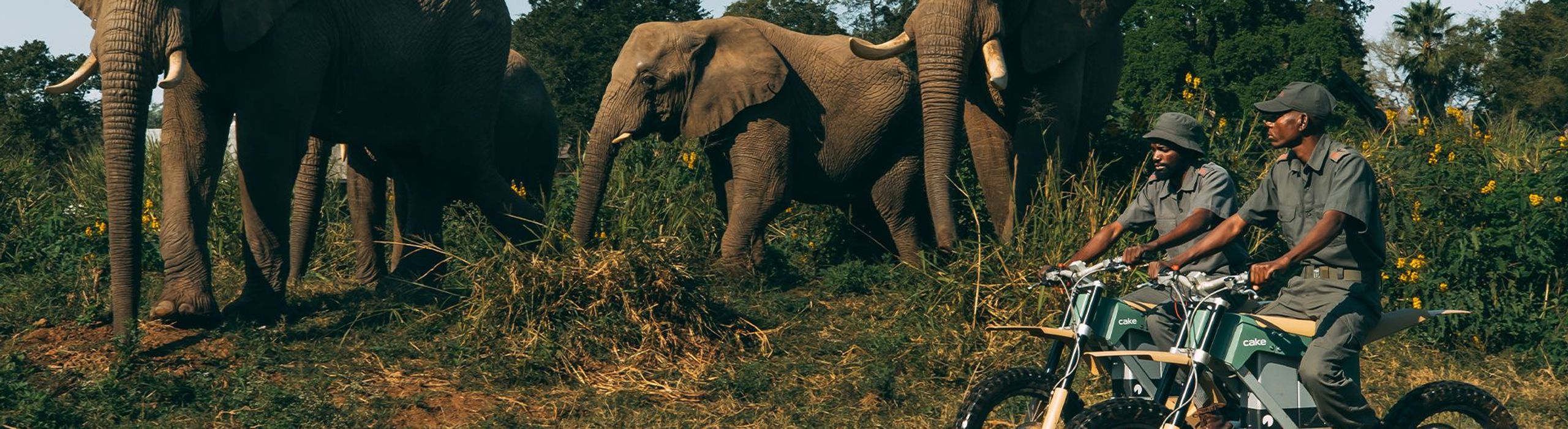
Poaching has become a growing concern for wildlife conservation areas worldwide, in some cases pushing animals to the brink of extinction. In a joint initiative, CAKE and the Southern African Wildlife College have set out on a mission to save wild endangered species – using quiet electric motorbikes.
An electric initiative to support wildlife conservation
Solar-powered wildlife conservation and improved anti-poaching efforts: For years, poaching has had devastating consequences for all wildlife. In some instances, it’s the primary reason why many species now face the risk of extinction. Recently, anti-poaching teams have started using dirt bikes for patrolling, as it’s considered the fastest and most agile vessel to use in the wild.
However, these bikes run on fuel, a scarce resource in the region that is expensive to transport in the remote areas. The combustion engine bikes also alert illegal poachers miles away with their noisy engines, failing to meet their core purpose: to save endangered species from extinction.
“This is a perfect example of purpose meeting sustainability”
- Stefan Ytterborn, CEO and founder, CAKE
Bikes by rangers, for rangers
In a close collaboration with rangers from the Southern African Wildlife College, CAKE’s engineers have developed the Electric Bush Bike series, allowing rangers to approach poachers silently without being detected and making way for more efficient anti-poaching patrolling in the region.
In close collaboration with the rangers, the platform will be tuned and optimized continuously, for the purpose of creating the best vehicle possible for anti-poaching.
Less costly fuel, more renewable power
With combustion engine motorcycles, buying and transporting fuel to the remote areas have proved both costly, inconvenient and very unsustainable. The fuel is shipped long-distance via petrol-driven trucks or even helicopters, driving both costs further and polluting the area.
With the new electric Kalk AP, rangers are equipped with a power kit and solar panels from leading solar power company Goal Zero, to supply the bikes with renewable power from the sun. The bikes can be charged via the power kit independently from any power outlet, enabling more freedom to ride and less pollution in the area.
”This partnership […] is extremely exciting. We are very proud to be partnering with CAKE and Goal Zero to test these electric off-road bikes given the impact that this could have on countering poaching across Africa.”
- Theresa Sowry, CEO
”The bikes we’ve used previously have all been loud, heavy and expensive to keep running in these areas. Sometimes we’ve had to transport the fuel with helicopters, which is very unsustainable and costly for us.
With the CAKE bikes, we can ride quietly and protect the wild from poaching more efficiently. ”
- Mfana Xaba, Anti-poaching team leader Southern African Wildlife College
Project partners

Goal zero
As a leader in solar powered technology, Goal Zero is committed to the world’s transition to sustainable energy. With two kits, the Goal Zero Yeti 6000X and The Boulder 200 Briefcases solar kit, Goal Zero is keeping the electric bush bikes rolling

Db
What started as a ski bag company by freeski legend Jon Olsson, is now a company creating backpacks, luggage, duffels sleeves and much more for all outdoor adventures. DB and CAKE have developed a first-aid kit bag that rangers can attach to the bike’s carrier. More info to come!

Silva
Silva develops high quality multi-activity outdoor equipment. In the partnership with Silva, the bikes are equipped with a powerful headlight, enabling effective night time riding in the bush.
Updates from the project
African conservation parks switch to Swedish electric motorcycles to combat wildlife poaching
2022-06-09
Read moreCake at Outdoor Retailer 2022: Introducing new models of Electric Bush Bikes in the Anti-Poaching series
2022-01-26
Read moreA partnership between the Southern African Wildlife College and CAKE Electric Motorcycles to leverage electric motorbikes and solar power in the effort to combat poaching in Africa.
2020-12-16
Read more